
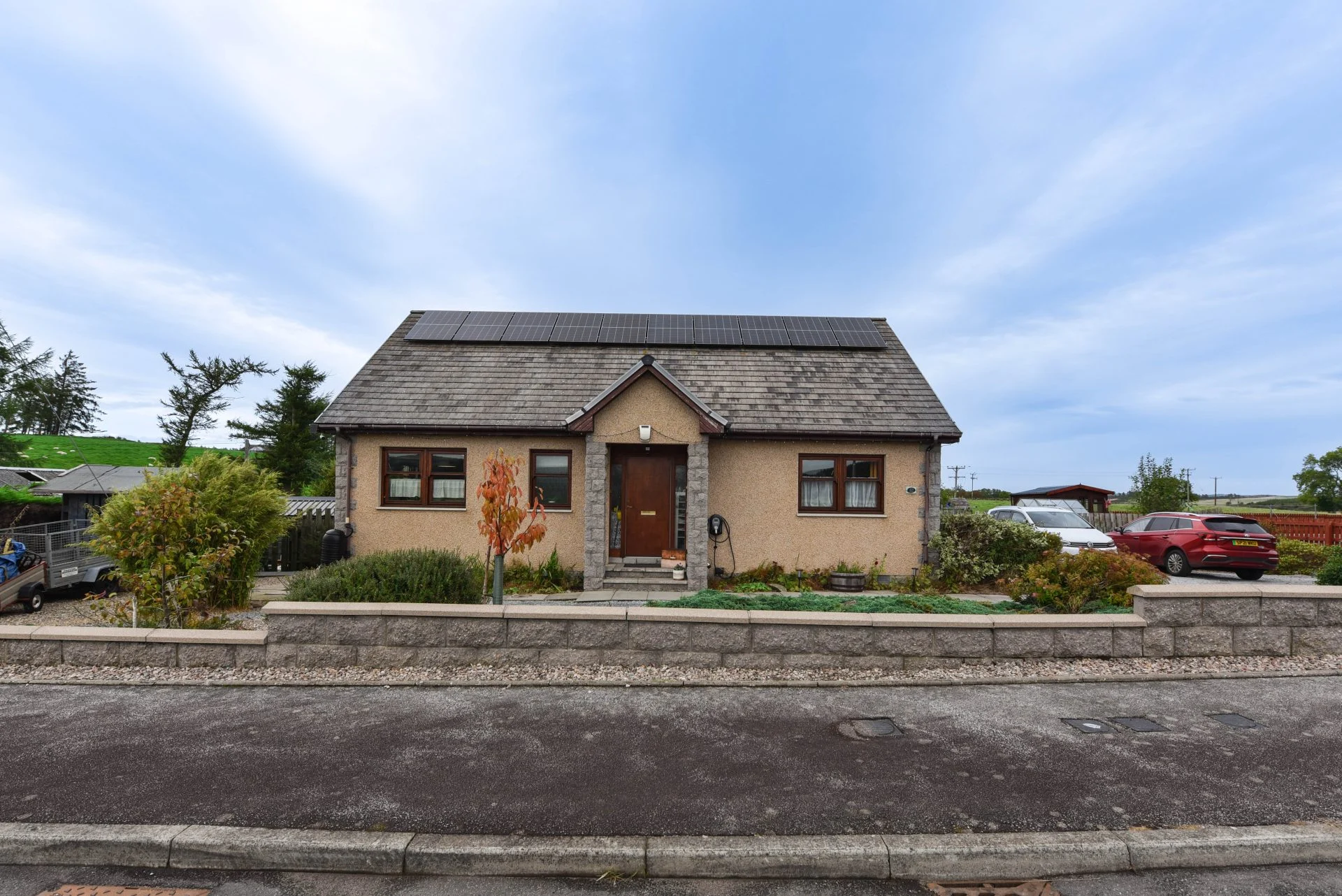
If you’re buying your first home, or moving to Aberdeen or Aberdeenshire from elsewhere in the UK, you may quickly notice that house buying in Scotland doesn’t work the way it does south of the border. There’s no “exchange of contracts,” offers are often invited “over” a set price rather than negotiated afterwards, and your solicitor is involved from the very start rather than joining once an offer is accepted.
None of this needs to be daunting once you understand the sequence of events. This guide walks through how buying a property in Scotland actually works, from getting your finances ready through to picking up the keys, and explains the terms you’ll come across along the way.
Why Buying a House in Scotland Is Different
In England and Wales, a buyer and seller can agree a price directly, and the deal isn’t legally binding until contracts are formally exchanged much later in the process, which is why sales there can fall through relatively easily right up to that point.
In Scotland, the system is built around solicitors acting for both sides from an early stage, a formal written exchange of offer and acceptance called “missives,” and a Home Report that’s typically already available when a property is marketed. Once missives are concluded, the contract is legally binding on both parties, which brings a different kind of certainty to the process, though it also means buyers need to have their finances and legal representation properly in place before they get to that stage, not after.
The Scottish House Buying Process, Step by Step
1. Get Your Finances in Order
Before you start viewing seriously, it’s worth having a clear idea of your budget and, ideally, a mortgage agreement in principle from a lender or adviser. This isn’t just good practice; sellers and their agents in Scotland often expect to see evidence of funding in place before a closing date is set, because offers here are taken seriously and can result in a binding contract quickly. Our mortgage advisers can talk you through what’s realistic for your circumstances before you start house hunting in earnest.
2. Register Your Interest Through a Solicitor
When you find a property you’re interested in, you (or your solicitor on your behalf) “note interest” with the selling agent. This does two things: it signals that you may make an offer, and it means the seller’s agent will let you know if a closing date is set, rather than accepting an offer from someone else without your knowledge.
3. Review the Home Report
Most residential properties marketed in Scotland come with a Home Report, commissioned by the seller before the property goes on the market. It includes a single survey of the property’s condition and valuation, an energy report, and a property questionnaire completed by the seller. Reading this carefully and asking your solicitor or surveyor about anything that concerns you is one of the most useful things you can do before deciding how much to offer.
4. Submit an Offer Through Your Solicitor
Offers in Scotland are submitted in writing by your solicitor to the seller’s solicitor or agent, not made verbally or informally. Many properties are marketed “offers over” a stated figure, which is a guide price rather than a fixed asking price; the eventual sale price can end up above, at, or in some cases below that figure, depending on interest in the property and local market conditions.
5. Closing Dates and Competitive Offers
If more than one buyer is interested in a property, the seller’s agent may set a closing date, asking all interested parties to submit their best and final offer by a specific time. This is sometimes referred to as a “blind bidding” system, because you won’t usually see what anyone else has offered. Not every property goes to a closing date; for properties with less interest, an offer may simply be negotiated and accepted directly.
6. Missives: When the Deal Becomes Binding
Once your offer is accepted, your solicitor and the seller’s solicitor exchange a series of formal letters known as missives, covering the price, date of entry, and any specific conditions of the sale. When missives are concluded (both sides have agreed all the terms in writing), the contract becomes legally binding on both you and the seller. This is a key difference from the English system, and it’s why having a solicitor involved from the outset matters so much in Scotland.
7. Conveyancing and Land and Buildings Transaction Tax (LBTT)
Between the conclusion of missives and your date of entry, your solicitor carries out the conveyancing work: checking title, dealing with your mortgage lender’s requirements, and preparing for settlement. If the purchase price is above the relevant threshold, you’ll also need to pay Land and Buildings Transaction Tax, which is Scotland’s equivalent of Stamp Duty Land Tax. Because rates, bands and any first-time buyer relief can change, it’s worth checking your likely liability using our free LBTT calculator rather than relying on figures you may have seen for the rest of the UK.
8. Date of Entry and Moving In
The date of entry is the day ownership formally transfers to you, and you receive the keys. It’s agreed as part of the missives, so unlike in some other systems you’ll typically know your moving date well in advance, which makes planning removals and time off work considerably easier.
What Is a Solicitor Estate Agent, and Why Does It Matter?
In Scotland, many solicitors also act as estate agents, marketing properties for sale as well as handling the legal side of the transaction. This “solicitor estate agent” model is well established in the Scottish property market and means a seller (or buyer) can deal with one firm for both the sale itself and the conveyancing, rather than coordinating between separate businesses.
Peterkins works this way across buying, selling and leasing property in Aberdeen, Inverurie, Huntly, Keith and the surrounding areas, with mortgage and financial advice available under the same roof. In practice, this means your solicitor already understands the transaction as your estate agent, which can make communication more straightforward at each stage.
Costs to Budget For When Buying a Home in Scotland
Alongside your deposit and mortgage costs, buyers in Scotland typically need to budget for:
- Legal fees for your solicitor’s conveyancing work
- Land and Buildings Transaction Tax, where applicable use our LBTT calculator to get an estimate based on your purchase price
- Mortgage-related costs, such as valuation or arrangement fees, which vary by lender
- Registration dues for recording your title with the Land Register of Scotland
Because these figures depend on your individual purchase and lender, it’s best to ask your solicitor or get a quote for an accurate picture rather than relying on general estimates.
Frequently Asked Questions
A Home Report is a set of documents including a survey, valuation, energy report and seller’s questionnaire that’s usually commissioned by the seller before a residential property is marketed in Scotland. As a buyer, you’ll normally be able to review it early in your decision-making, which is different from England, where a survey is typically arranged by the buyer after an offer is accepted.
“Offers over” indicates a guide price the seller is inviting offers above. It isn’t a fixed asking price, and the eventual sale price depends on the level of interest in the property.
Yes. Offers, negotiations and the exchange of missives are all handled through solicitors in Scotland, and the process cannot proceed to a legally binding contract without one.
A closing date is a deadline set by the seller’s agent for interested buyers to submit their best offer, used when a property has attracted more than one interested party.
Once missives are concluded, meaning both solicitors have agreed all the terms of the sale in writing, the contract is binding on both buyer and seller.
The core differences are the use of Home Reports before marketing, the “offers over” pricing system, competitive closing dates, and the point at which the deal becomes legally binding (at conclusion of missives in Scotland, rather than exchange of contracts later in the process as in England).
Ready to Start Your Home-Buying Journey?
Buying a home in Scotland involves a distinct process, but with the right guidance at each stage, from your mortgage, through offers and missives, to the day you get your keys, it doesn’t need to be complicated.
Peterkins has supported buyers across Aberdeen, Aberdeenshire and North East Scotland for over 100 years, combining estate agency, legal and financial advice under one roof. Browse properties for sale, speak to our property purchase team, or contact us to talk through your next move.